


Pictured: Route 66 License Plate
TIDBITS FOR SUMMER 2026
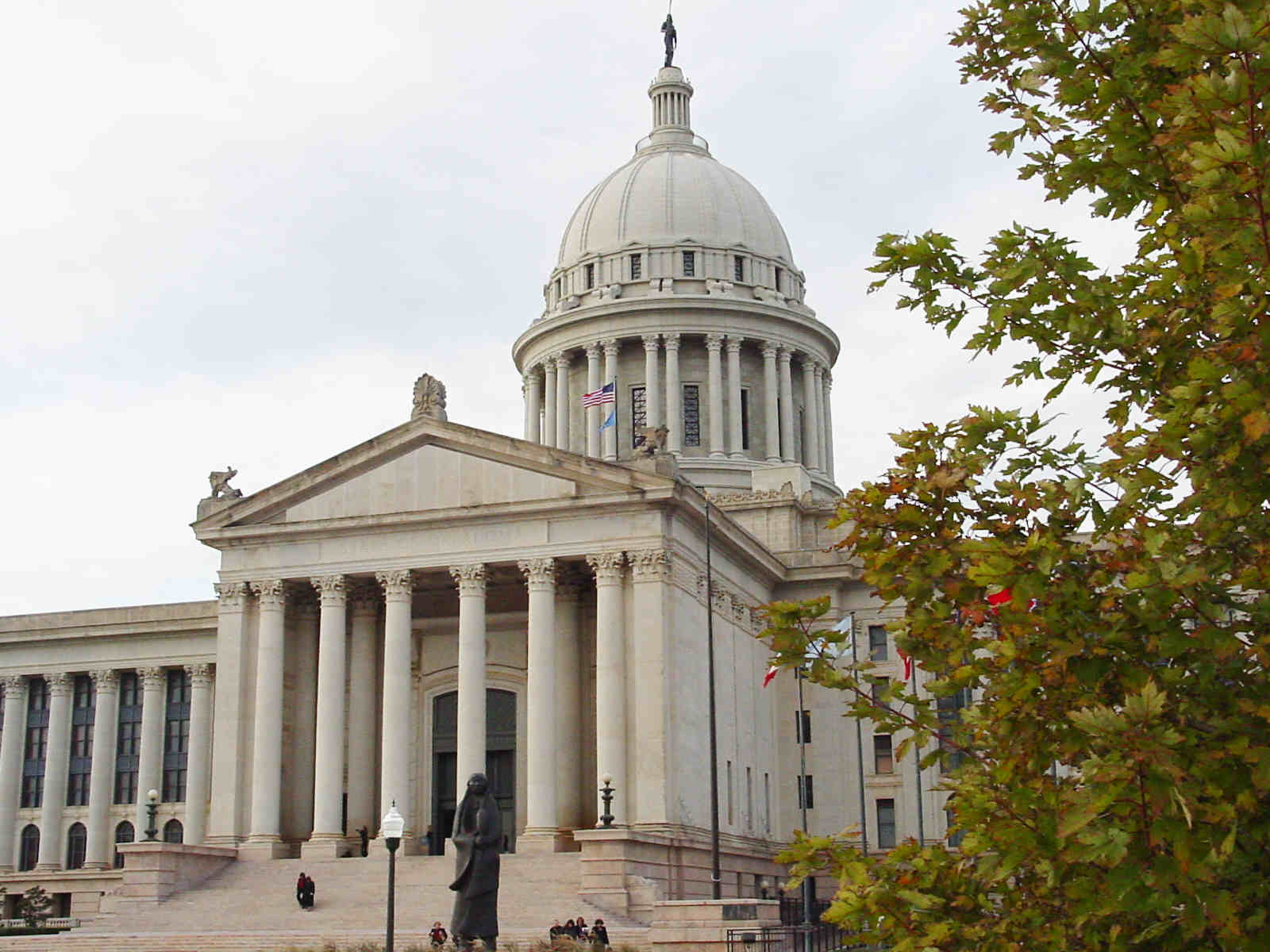
On July 8, a public drawing was conducted by Paul Ziriax, the Secretary of the State Election Board, to determine the ballot order for political parties and independent (no political party) candidates for the November 3 General Election ballot. The drawing was held at the State Capitol Building in accordance with state law. The results of the drawing – and the order that the candidates of each of the officially recognized political parties will appear on the ballot – is as follows: Republican Party candidates will be listed first, then Democratic Party candidates, followed by the candidates of the Libertarian Party.
Independent candidates, those not associated with a recognized political party, will be placed on the ballot following the candidates of the recognized political parties. Where there is more than one independent candidate for a particular office, a drawing was held to determine the ballot order for those candidates.
Studies have shown that candidates that are listed first have a slight advantage over those listed further down on the ballot. Prior to 1996, Oklahoma law placed the recognized political party with the largest number of registered voters first on the General Election ballot, giving the state’s dominant party the top position in every election. Lawmakers changed the system that year, replacing the automatic placement with the order determined by the random public drawing, giving each political party an equal chance to appear first.
Legislature Led by RINOs
Both chambers of the Oklahoma Legislature are led by RINO (Republican In Name Only) lawmakers. House Speaker Kyle Hilbert (R-Bristow) scored 40% on the 2026 Oklahoma Conservative Index published in this Summer edition of the Oklahoma Constitution. His cumulative average score for all the years he has been in the House is 58 percent. Meanwhile, his counterpart in the upper chamber – Senate Pro Tem Lonnie Paxton (R-Tuttle) – scored 33%, and the cumulative average for his legislative career is 61 percent. Both leaders took the liberal position on six of the ten bills in this year’s ratings. With both chambers being led by RINOs, it is no surprise that the majority of Republicans(?) in the legislature are also RINOs. Or is it the old chicken or the egg concept?
Franklin Most Moderate GOP Candidate
Erin Brewer, the Chair of the Oklahoma Democratic Party, issued an Election Day Recap email following the June 16 primary elections. In a section labeled “REPUBLICANS MODERATED .... A BIT,” she found it significant that “Robert Franklin, the 44-year educator and most moderate candidate in the Republican field, led the State Superintendent race.” To see why he is viewed as a moderate Republican, some would say liberal, see our article “Superintendent Candidate Robert Franklin: A Wolf in Sheep’s Clothing?” in this edition of the Oklahoma Constitution newspaper.
There has been a concerted effort to get Democrats to re-register Republican to elect non-conservative Republicans – like Franklin. In fact, Franklin donated to the last Democratic Party candidate for governor. Were Franklin have run as a Democrat, he would almost certainly have lost in the November election. But apparently, many are hoping that Republicans will not be paying enough attention to the GOP run-off contest.
On another note, had the proposed Jungle Primary been in effect for this primary – in which all candidates, regardless of political party, run in one unified primary – Franklin and the official Democrat candidate for state school superintendent would have advanced to a general election run-off.
Weaver Appointed Interim Cleveland County Sheriff
Just two weeks after he failed to win the Republican nomination for Lt. Governor in the June 16 Primary election – finishing in second place – outgoing state Senator Darrell Weaver (R-Moore) was appointed as Cleveland County Interim Sheriff. He replaces Chris Amason who resigned after pleading no contest to an embezzlement indictment. Weaver did not file for reelection to the Senate last April, opting instead to make the race for Lt. Governor. He took over as Interim Sheriff on July 6, and resigned from the final months of his Senate term. Before serving in the Senate, Weaver served for 28 years at the Oklahoma State Bureau of Narcotics, as director from 2006 to 2018. He was inducted into the Oklahoma Law Enforcement Hall of Fame in 2014.
Chickasaw Nation Governor Retires
Bill Anoatubby, the Governor of the Chickasaw Nation, retired from the office on June 26. For nearly 40 years Anoatubby led the 12th largest indigenous tribe in the United States. He was last elected to a four-year term in 2023. A statement released by Anoatubby said, “It has been a blessing and my great honor to serve the citizens of the Chickasaw Nation as Governor. After much prayer, thought and discussion with my family, I have decided it is time to retire and entrust leadership to a new generation of dedicated and capable leaders.” Anoatubby began his career with the Chickasaw Nation in 1975 as health services director. He was elected as the tribe’s first lieutenant governor in 1979 and was first elected governor in 1987. He has since been elected to ten terms, making him the longest-serving governor in Chickasaw Nation history.
During his tenure, the Chickasaw Nation grew from approximately 250 employees and an $11 million operating budget to nearly 15,000 employees and an economic impact exceeding $8 billion. The tribe also expanded its business holdings and now operates more than 100 businesses across a variety of industries, helping fund hundreds of programs and services for Chickasaw citizens.
His son,Chris, the elected lieutenant governor of the tribe, will complete the remainder of his term. Chris Anoatubby has served the Chickasaw Nation for nearly 30 years and has been lieutenant governor since 2019. Prior to that role, he served in a variety of leadership positions within the tribe, including chief pharmacist, president of Sovereign Medical Solutions and deputy secretary of health.
New Legislator Sworn Into Office
Newly elected state Representative Sam Wargin Grimaldo (D-Oklahoma City) took his oath of office on June 26 in the Oklahoma House of Representatives. He was elected during the June primary elections and was sworn into office now to fill the vacant House District 92 seat. State Rep. Forrest Bennett (D-Oklahoma City) resigned his seat in the Oklahoma Legislature, effective December 1, 2025, in order to serve as the new president and lobbyist for the Oklahoma State AFL-CIO, Oklahoma’s largest labor union.
Governor Stitt set the Special Election dates for the seat in south Oklahoma City to coincide with the regular 2026 election schedule. Since the same two Democrats were the only candidates to file for both the special and regular elections, both races were be settled simultaneously in the June 16 Democratic Primary, and Wargin Grimaldo narrowly won both elections. So, he will serve the remainder of Rep. Bennett’s term, and then will begin serving the full two-year term for which he won in the regular election.
The former teacher with the Oklahoma City Public Schools, is now a criminal defense and immigration attorney. He worked as an education advocate with the GEAR UP program at UCO before going on to be a bilingual public school teacher and then earning his Juris Doctorate from the University of Oklahoma College of Law. He will join the Oklahoma Legislative Latino Caucus (OLLC).
Oklahoman Named ICE Director
On June 27, President Donald Trump nominated a former trooper with the Oklahoma Highway Patrol to lead Immigration and Customs Enforcement (ICE). The nomination of Richard “Lance” Schroyer came just after a U.S. Supreme Court decision that allows the Trump administration to strip legal status for 350,000 Haitians and 6,000 Syrians. “Lance Schroyer has what it takes to DETAIN AND DEPORT Illegal Alien Criminals,” Trump wrote on his Truth Social account. Schroyer, who has served in law enforcement for nearly 30 years, will have to be confirmed by the Senate.
Schroyer has been serving as an adviser to Oklahoma’s former U.S. Senator Markwayne Mullin, who is now the Secretary of Homeland Security, and oversees ICE. Schroyer has worked to establish Oklahoma’s law enforcement partnership with the federal government to assist with immigration enforcement in the 287g program. Mullin praised Schroyer’s work with the program. “Lance is coming straight from the operational field where he ran large scale operations and worked alongside state and federal partners to remove illegal aliens from Oklahoma under the 287g program,” Mullin said in a statement.
Birthright Citizenship Decision
Following the June 30 decision by the U.S. Supreme Court in Trump v. Barbara concerning birthright citizenship, Oklahoma U.S. Sen. James Lankford responded: “This same court, four years ago, passed the Dobbs decision to overturn Roe v. Wade, which I strongly supported, but today I do not agree with the 5-4 split decision to give American citizenship to individuals whose families intentionally violated the law. The divided decision in the court reminds us again of the division in our nation. However, Americans honor our courts even when we disagree.” Senator Lankford expressed the need for legislation in Congress. “President Trump has done extraordinary work to keep our borders safe and secure, but we need to pass stronger laws that will prevent a future administration from opening the border again. We need to make it unconstitutional to obtain citizenship through fraud or illegal actions.”
Court Ruling on Men in Women’s Sports
On June 30, the U.S. Supreme Court ruled in a 6-3 decision that states can legally ban transgender women and girls from competing in female school sports. In 2022, the Oklahoma Legislature passed Senate Bill 2, the Save Women’s Sports Act, which was signed into law by Governor Kevin Stitt. It was one of the ten bills included on the 2022 Oklahoma Conservative Index published by the Oklahoma Constitution newspaper. The law protects female athletes from competing against males who identify as females in school-sponsored athletic events. The Save Women’s Sports Act expressly designates that athletic teams sponsored by a public or private school must be based on biological sex and divided into three categories: males, females, or co-ed. The law also states that any student deprived of an athletic opportunity or who suffers direct or indirect harm as a result of a violation of these categories has a cause of action for injunctive relief and damages against the school.
Senator Kirt 2026 Women of Impact Honoree
Oklahoma Senate Minority (Democrat) Leader Julia Kirt (D-Oklahoma City) was recently recognized by the United Nations Association of Oklahoma City (UNA-OKC) as a 2026 Women of Impact honoree. The UNA-OKC chapter is dedicated to educating, inspiring and mobilizing Americans to support the principles of the United Nations. Senator Kirt was nominated for the Women of Impact award by UNA-OKC member Hilda De Leon Xavier. “Through advocacy, mentorship, and policy initiatives, she advances education, healthcare, and economic opportunities, supporting the United Nations’ goals of gender equality, social inclusion, and human development,” De Leon Xavier said.
Before being elected to the Oklahoma Senate, Kirt spent nearly two decades leading nonprofit arts and culture organizations. She was elected as the Senate Minority Leader in 2024. “I am deeply honored to receive this award from the United Nations Association of Oklahoma City. We need more Oklahomans coming together like this to fight for equality, dignity and opportunity for all,” Kirt said. “Thank you to UNA-OKC for this honor. I am hopeful about the work we can do together.” The liberal senator scored 10% on the 2026 Oklahoma Conservative Index.
Accelerated Bachelor’s Degree Programs
On June 3, Gov. Kevin Stitt applauded recent action by the Oklahoma State Regents for Higher Education to create a framework for accelerated bachelor’s degree programs at Oklahoma’s public colleges and universities. The effort builds on legislation and Executive Orders he issued earlier this year to advance three-year, 90 credit hour degree pathways. “This legislation is about making Oklahoma more competitive and helping our kids get from the classroom to a good paying job with less debt,” said Governor Stitt. “A three-year degree speeds up workforce entry and makes so much sense for students who are ready to work and support a family, right here in Oklahoma.”
House Bill 3315 builds on Executive Order 2026 07, which launched a 90 day study of 90 credit hour “accelerated” bachelor’s degrees and their impact on Oklahoma’s workforce. The feasibility study, presented to the State Regents at their March 26 meeting, looked at accreditation rules, workforce needs, costs to students, transfer issues, and other key factors. It found that accelerated bachelor’s degrees could work in Oklahoma’s public colleges and universities if they are limited to certain workforce focused fields and include strong safeguards, clear approval processes, good advising, and careful attention to transfer and licensure.
CLO Sets Distribution Record to Schools
Oklahoma’s Commissioners of the Land Office (CLO) distributed a record $160 million to support public education during the state fiscal year which ended June 30, marking the third consecutive year the agency has set a new distribution record. The funding was distributed to all 507 Oklahoma K-12 public school districts and 13 higher education institutions across the state. The agency’s annual distributions have increased during the past three fiscal years, rising from $145 million to $156 million and now to $160 million. The constitutionally established state agency manages land and other assets held in trust to benefit Oklahoma education. In addition to financial investments, the agency manages and leases about 726,000 surface acres and 1.1 million acres of mineral rights, generating revenue through agricultural, recreational and commercial leases, as well as oil and gas royalties.
Oklahoma Cash Rounding for Government Payments
Cash payments made to Oklahoma state and local governments will be rounded to the nearest nickel after the Oklahoma Common Cents Act was signed into law. House Bill 3075, authored by Rep. Derrick Hildebrant (R-Catoosa) and Sen. Chuck Hall (R-Perry) establishes standardized rounding rules for cash transactions made to state agencies and political subdivisions. The rounding requirements apply only to cash, public transactions made to government entities and does not impact private businesses or electronic transactions. Payments made by check, debit card, credit card or other electronic methods will not be affected. “As the use of the penny continues to decline, there is a need for clear statutory authority allowing state agencies and political subdivisions to round cash transactions in a consistent manner. I appreciate the Governor for signing this into law and my colleagues for their unanimous support in moving this measure forward,” Hildebrant said.
Under the new law, cash payments ending in $0.01 or $0.02 would be rounded down to $0.00, amounts ending in $0.03 or $0.04 would be rounded up to $0.05, amounts ending in $0.06 or $0.07 would be rounded down to $0.05, and amounts ending in $0.08 or $0.09 would be rounded up to $0.10. To address any minimal rounding differences in property tax collections, the measure directs counties to absorb discrepancies through unappropriated general fund revenue. For all other payments, political subdivisions may use any available fund under their control to account for rounding differences. The law takes effect November 1 for state agencies. Cities, counties and other political subdivisions will have until July 1, 2027, to comply with the new requirements.
Wheat Official State Crop
In the last legislative session, the Oklahoma Legislature passed Senate Bill 2159 to designate wheat as the State Crop of the State of Oklahoma. Oklahoma ranks second in the United States in annual winter wheat production and third overall in total wheat bushels harvested each year, with most of that production concentrated in the central and western parts of the state. The bill, was authored by Senator Roland Pederson (R-Burlington). The legislation was requested by and crafted in collaboration with the Burlington FFA Chapter. Pederson worked closely with chapter members and their advisor to shape the legislation honoring Oklahoma wheat farmers, whose efforts have contributed to the state’s national reputation for premier wheat production and research. Pederson noted the significance of naming wheat the state crop for his district. Senate District 19 includes Enid, known as the “Wheat Capital of the United States,” and other northwest Oklahoma communities that boast significant grain storage capacity. Rep. Dillon Travis (R-Maramec) carried the bill in the House of Representatives, securing the final legislative approval needed to send the measure to the governor’s desk. Governor Stitt approved the bill on May 6, and it will go into effect on November 1.
Gold Star Families Memorial Monument
House Bill 4486, authored by state Rep. Tammy Townley (R-Ardmore), authorizing the placement of a Gold Star Families Memorial Monument on the Oklahoma State Capitol grounds. It passed the Oklahoma Legislature and was signed into law by Governor Stitt. The legislation allows the State Capitol Preservation Commission to work with private entities to design, construct and place the monument near the new Capitol Arch at no cost to taxpayers.
The monument will honor families who have lost a member in military service and is part of a national effort led by the Woody Williams Foundation. The memorial will feature four pillars representing homeland, family, patriot and sacrifice, with imagery designed to reflect Oklahoma communities and military service. Townley said placing the monument at the Capitol ensures it will be accessible to all Oklahomans and visitors, creating an opportunity for reflection, education and recognition of those who have given their lives in service to the country. Sen. Kelly Hines (R-Edmond) – a retired U.S. Army Colonel – was the Senate author of the bill.
Taiwan Regional Trade Office
On June 30, a new Taiwan Regional Trade Office opened in Oklahoma. The office is housed within the Oklahoma Department of Commerce and was officially opened during a ribbon-cutting ceremony at the Capitol. State Representative Daniel Pae (R-Lawton) and Sen. Roland Pederson (R-Burlington) who authored Senate Bill 209 establishing the office, said it will help expand trade, encourage investment and create new opportunities for Oklahoma businesses. The legislation was approved by the Oklahoma Legislature in 2025 and became law without the governor’s signature.
“Oklahoma’s longstanding sister-state relationship with Taiwan has been a valuable partnership for many years, and today’s opening of the Taiwan Regional Trade Office builds on that strong foundation,” Pederson said. “By expanding trade and encouraging investment, this office will help create new opportunities for Oklahoma businesses and communities. I was proud to author the legislation establishing this office, and I’m grateful to Rep. Pae for his partnership in helping turn that vision into a reality for the benefit of Oklahoma and Southeast Asia.”
New Training System at Vance Air Force Base
On July 8 it was announced that Vance Air Force Base (AFB) will become the fourth T-7A Main Operating Base which includes increased mission capabilities and new personnel. The Air Force will replace the T-38C aircraft at Vance AFB with the T-7A. The U.S. Air Force T-7A Recapitalization Program replaces the aging T-38C fleet with the modern T-7A advanced trainer aircraft designed to better prepare pilots for 4th-, 5th-, and future 6th-generation aircraft. It fields a new training system that integrates the T-7A aircraft with advanced simulators, ground-based training, and updated infrastructure across key pilot training bases. The Air Force will support all aspects of the T-7A recapitalization, including construction and upgrades to operations, support, and maintenance facilities to support pilot training and aircraft operation and maintenance. In aircraft alone, this represents an investment of up to $2 billion at Vance AFB. Congressman Frank Lucas applauded the announcement.”With the largest military operating area, cheapest pilot training pipeline cost, and a fourth runway, Vance Air Force Base is a seamless partner for the Air Force to integrate the T-7A,” said Lucas.
Passing of Former Rep. Don Ross
Former state Representative Don Ross (D-Tulsa) died on May 5, 2026. He was 85. Ross was elected to the Oklahoma House of Representatives (House District 73) in 1982 and retired in 2002. In a Democratic majority led Legislature, Representative Ross spent a decade as the chair of the Appropriations and Budget Subcommittee on Health and Social. He previously served in the Air Force. A descendant of survivors of the 1921 Tulsa Race Riot, the Black legislator was instrumental in the establishment of the Greenwood Cultural Center, the 2001 Tulsa Race Riot Commission, and the Tulsa Reconciliation Education Scholarship. He was one of the politically liberal legislators, scoring a cumulative average of 14 percent on the Oklahoma Conservative Index.
Passing of Former Rep. Guy Liebmann
Former state Representative Guy Liebmann (R-Oklahoma City) passed away June 8. He was 90 years old. Prior to his election to the Oklahoma Legislature, Liebmann represented Ward 8 on the Oklahoma City Council from 1995 to 2004 and served as Oklahoma City’s 36th mayor in an acting capacity from November 2003 to March 2004. Because he was vice mayor, he was appointed acting mayor to complete the remainder of the term of Mayor Kirk Humphreys who resigned in 2003 to run for the U.S. Senate. Liebmann was succeeded by Mick Cornett. Liebmann resigned from the City Council in 2004 after being elected to represent House District 82 in the Oklahoma House of Representatives, where he served through 2012. He was one of the more moderate Republicans in the legislature, earning a cumulative average of 61% on the Oklahoma Conservative Index during his time in the legislature.
Route 66 License Plate
Oklahomans will soon be able purchase a specialty license plate celebrating the 100th anniversary of U.S. Route 66 under a new law approved by the Legislature. House Bill 3147 authorized the creation of a Route 66 Centennial license plate, developed in coordination with the Oklahoma Route 66 Centennial Commission. The measure became law without the governor’s signature after passing unanimously in both chambers. The plate marks the centennial of Route 66, established on November 11, 1926, with nationwide celebrations taking place throughout 2026. According to the Oklahoma Route 66 Association, the highway runs through more than 40 Oklahoma communities and spans over 400 miles across the state. Before production can begin, at least 100 pre-orders are required. Up to $20 from each plate sold will go to the Oklahoma Route 66 Association to support promotion and preservation efforts.
Representative Derrick Hildebrant (R-Catoosa), the bill’s author, said the highway remains a defining part of the state’s identity and economy. “Oklahoma has the longest drivable stretch of Route 66, and it is filled with the diners, motels, museums and small businesses that tell the story of our state and our country,” Hildebrant said. Sen. Ally Seifried (R-Claremore), the Senate author, said the plate offers residents a way to celebrate the historic roadway. “Route 66 is one of Oklahoma’s greatest economic and cultural assets, bringing visitors from around the world and supporting jobs in cities and towns along the route,” Seifried said.





Latest Commentary
Friday 23rd of October 2026
Friday 23rd of October 2026
Friday 23rd of October 2026
Friday 23rd of October 2026
Friday 23rd of October 2026
Friday 23rd of October 2026
Friday 23rd of October 2026
Friday 23rd of October 2026
Friday 23rd of October 2026