

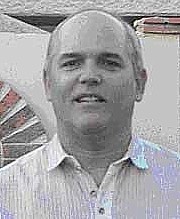
Pictured: Allan Wall
Oklahoma's Independence 250 Heritage
By Allan Wall
July 4th, 2026 was the 250th anniversary of the adoption of the Declaration of Independence, 250 years ago. I hope that all the readers of the Oklahoma Constitution had a good Independence Day.Two hundred and fifty years is a quarter-millennium, making the USA the 23rd oldest nation-state in the world.
Oklahoma was not one of the 13 English Colonies that became the USA, so we don’t have Revolutionary War battlefields in Oklahoma.
However, as State #46 in the United States of America, Oklahoma is a part of the American nation-state and its history.
Many Oklahomans are descendants of men who served in the American Revolution. The Sons of the American Revolution (SAR), which I recently joined, is an organization composed of male biological descendants of at least one ancestor who served in, or contributed to, the American effort in the American Revolution.
You may have Revolutionary War ancestors and not even know it. After all, you have many ancestors. Go back six generations and you have 64 great-great-great-great-grandparents!
There are seven local chapters of the SAR in Oklahoma: Ardmore, Bartlesville, Canadian Valley (western OKC metro and area), Indian Nations (McAlester), Norman, Oklahoma City (meets in Edmond), and Tulsa.
Female descendants can join the Daughters of the American Revolution (DAR). There are 45 DAR chapters in Oklahoma, with over 3000 members.
If you’re interested, visit a meeting of one of these organizations.
Did you know that there is at least one Revolutionary War veteran buried in the current state of Oklahoma? This individual’s name was Montfort Stokes. Stokes’ life story provides a direct link, in the life of one man, between the 1776 generation and the state of Oklahoma.
I recommend a 1940 article in the Chronicles of Oklahoma entitled The Career of Montfort Stokes in Oklahoma.
Born in 1762 in Virginia, Montfort Stokes entered Revolutionary War Service in 1775 at the age of 13 (!). In 1841, Stokes summed up his Revolutionary War service thusly: “I was in the public service, either in the land or sea service, during the whole of the Revolutionary War, from 1775 to 1783, and am among the last of those who remain of that class.”
It’s believed that his maritime service was on a privateer ship, a privately-owned vessel authorized to raid enemy commerce. After being captured by the British, young Montfort was imprisoned seven months on a British prison ship in New York Harbor.
According to Stokes, he served throughout the whole war on land and sea, but we don’t know all the details. After the war, Montfort Stokes settled in North Carolina where he was a plantation owner, studied law and made the acquaintance of a certain Andrew Jackson.
Montfort Stokes began a long and illustrious career of public service through the decades as a court clerk, county clerk, North Carolina Senate clerk, Boundary Commissions Member, Major General of the State Militia (1804-1816), Trustee of the University of North Carolina at Chapel Hill (1805-1838), U.S. Senator (1816-1823), State Senator (1826-1827), Representative in the North Carolina House of Commons (1829-1830) and finally, as Governor of North Carolina (1830-1832).
In 1832, Governor Montfort Stokes was asked by his old friend Andrew Jackson, now President of the United States, to be the head of the Board of Indian Commissioners.
Stokes accepted the offer, resigned as governor, and made his way to Indian Territory, now Oklahoma, then on the edge of U.S. territory.
For the last ten years of his life, Montfort Stokes lived near Fort Gibson and managed Indian affairs under the aegis of several titles, dealing with various Indian Tribes and administering Indian policy. Stokes was sympathetic to the Indians and did his best to give them a fair shake.
Montfort Stokes died in 1842 and was interred in Indian Territory, making him the only known Revolutionary War veteran buried in Oklahoma.
A 1935 article reports that after a Muskogee meeting of SAR, “…[T]he assembled members made a pilgrimage to old Ft. Gibson and to the grave of Gov. Montfort Stokes at that place. Gov. Stokes is the only soldier of the Revolution to sleep within the confines of our beloved State and it was so fitting that the members of this patriotic society should pause at his bier on this occasion of their annual meeting.”
These 1935 SAR members knew where Stokes’ grave was, but now the location is uncertain. There is a monument placed by the DAR.
It appears that his remains have been moved once or twice and may now be buried in the Cherokee National Cemetery at Ft. Gibson, either in a currently-unmarked grave or one with an unreadable tombstone.
Hopefully someday, some intrepid Oklahoman will locate the grave of Montfort Stokes, an American Revolution veteran buried in the soil of Oklahoma.



Latest Commentary
Friday 24th of July 2026
Friday 24th of July 2026
Friday 24th of July 2026
Friday 24th of July 2026
Friday 24th of July 2026
Friday 24th of July 2026
Friday 24th of July 2026
Friday 24th of July 2026
Friday 24th of July 2026
Friday 24th of July 2026