


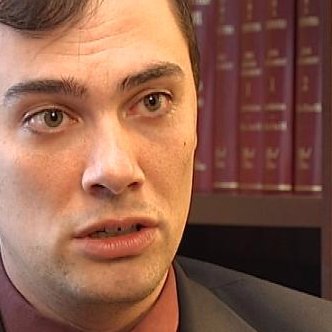
Pictured: Jason W. Murphey
The State Senate Wildcard Nobody Is Talking About
And it’s not the only important observation from the 2026 Republican primary that isn’t being given its proper attention.
Consider the following. A nearly nine-decade pattern in Oklahoma politics now appears poised to be broken: Not since Leon “Red” Phillips won the governorship in 1938 has a former speaker of the Oklahoma House – the holder of what is arguably the most powerful political office in state government – subsequently become either governor or lieutenant governor. Others have tried.
In 2006, even as Oklahoma was steadily moving into the Republican column, Todd Hiett – the first Republican House speaker in more than eight decades – ran for lieutenant governor. He was defeated, suffering the same fate that had befallen former Democratic Speaker Steve Lewis in his 1990 gubernatorial bid.
It is a striking political paradox: The speaker controls recognition, committee appointments, committee membership, and the referral of bills – extraordinary institutional powers. Yet, despite all that power, the office has proved an exceptionally poor launching pad for the governor’s mansion.
But there’s an even more striking paradox: the sharp contrast between the two ex-House speakers vying for the offices of governor and lieutenant governor during this election.
The first was T.W. Shannon, who became House speaker at the height of the transparency movement that defined the first generation of majority Republicans. Shannon embraced the concept. As speaker-elect, he commissioned a committee to apply a new generation of transparency principles to the House rules.
As Shannon prepared to take office, that committee met repeatedly and ultimately proposed a remarkable reform: removing control of the House floor agenda from the speaker’s office and vesting it instead in a committee meeting publicly, where the public itself could observe its deliberations.
Under the proposal, only that committee could determine what legislation reached the House floor. Not a backroom group. Not the majority leader. Not even the speaker.
The concept was this: on the road to transparency, this would be a big step. If a bill came out of committee with a do-pass recommendation, then it would no longer be possible for one tyrannical individual, behind closed doors, to stop that bill from being heard. And any member of the committee, known as the “Calendar Committee” could propose that the bill be added to the House agenda.
In endorsing this plan, Shannon had given away a considerable amount of his power. No longer was the floor agenda a matter of smoke and mirrors; rather, it was a public committee casting public votes, for which its members could be held accountable.
But what the public never did see, but I did, was what Shannon didn’t do: he didn’t attempt to become an imperial speaker.
For you see, Shannon was subject to the House Republican caucus’s four-year term limit for speakers – a common-sense rule reflecting the American principle that political power should be temporary rather than permanent.
But Shannon wasn’t set to be term-limited from his House seat for another eight years.
And so the suggestion quickly started circulating, under the faux logic of putting the House on parity with the Senate – which apparently had no such limitation on their president pro tempore – that we, the Republican caucus, should remove that rule.
But to Shannon’s great credit, he never attempted to do so. He left the rule in place, meaning that had he stayed in the House throughout his full term as state representative, he would have spent the last four years on the back benches with the regular members of the House.
By complete contrast, four short years later, one of the first actions of Charles McCall’s leadership team was to do the exact opposite. They struck the caucus term limit and endowed McCall with what would become known as the imperial speakership – or, a title McCall would later endow himself with, Speaker Maximus.
Under the imperial speakership, McCall and his lieutenants steadily stripped power from rank-and-file members and concentrated authority in the speaker’s office. By the time McCall departed, an individual representative scarcely retained the practical authority to rise and make a motion on the House floor.
The practice remains alive today, as House Speaker Kyle Hilbert’s appointed majority floor leader, Josh West, refuses requests to enter motions.
Put simply: without that right, there are few reasons to even elect state representatives in the first place. The state should simply save the expense and directly elect the speaker in a statewide vote.
Against that backdrop, the contrast in their political fortunes is difficult to ignore. Shannon won his nomination outright in a crowded six-way primary and now appears poised to become the first former House speaker in nearly nine decades to reach higher statewide office. McCall, despite spending millions on his gubernatorial campaign, finished fifth.
One gave up great power. The other seized more of it.
Had McCall followed Shannon’s example, had he accepted the advice of his wisest advisors and returned the House to the path of transparency, he could have had a real campaign, of real accomplishments, that meant something to the average voters. He had all the money he ever needed to deliver a campaign message, but despite all of those years as perhaps Oklahoma’s most powerful office holder, he had no credible campaign message.
So, that paradox aside, here’s what people are overlooking: Shannon knows what transparency looks like. He came of age, politically, as a first-generation majority Republican who knew a time when Republicans had been in the minority and aspired to reform the legislature.
The question is, does he still hold those values? If so, he will look at what occurred in the Senate on the last day of this year’s session, when the Senate’s presiding officer refused to allow a vote on one of the Trump administration’s top priorities, and he will see an opportunity: to do in the Senate what he did in the House – restore transparency to a body whose reputation for open and robust debate was so badly damaged that day.
If he wins in November, Shannon will need to understand the role in two key respects.
First, the Senate has historically been a forum for open deliberation, giving its members greater latitude to bring forward debate than their counterparts in the House. That tradition has helped define the institution – at least until the recent leadership decisions so diminished its deliberative standing.
Second, will Shannon recognize that the lieutenant governor’s role is more than ceremonial and choose to actively preside over the Senate out of a sense of responsibility to both the office and the public, as the Constitution envisions?
That is the wildcard few are discussing: the possibility that Paxton could, at least to some extent, be checked by Shannon, who has a record of advancing transparency and openness.
For Shannon, the easy path is to do what most do in the lieutenant governor’s office: coast. Waiting for his turn to move into the big house.
But, Shannon didn’t take the easy path last time. And, here’s betting that he might not do it this time either.


Latest Commentary
Friday 24th of July 2026
Friday 24th of July 2026
Friday 24th of July 2026
Friday 24th of July 2026
Friday 24th of July 2026
Friday 24th of July 2026
Friday 24th of July 2026
Friday 24th of July 2026
Friday 24th of July 2026
Friday 24th of July 2026