

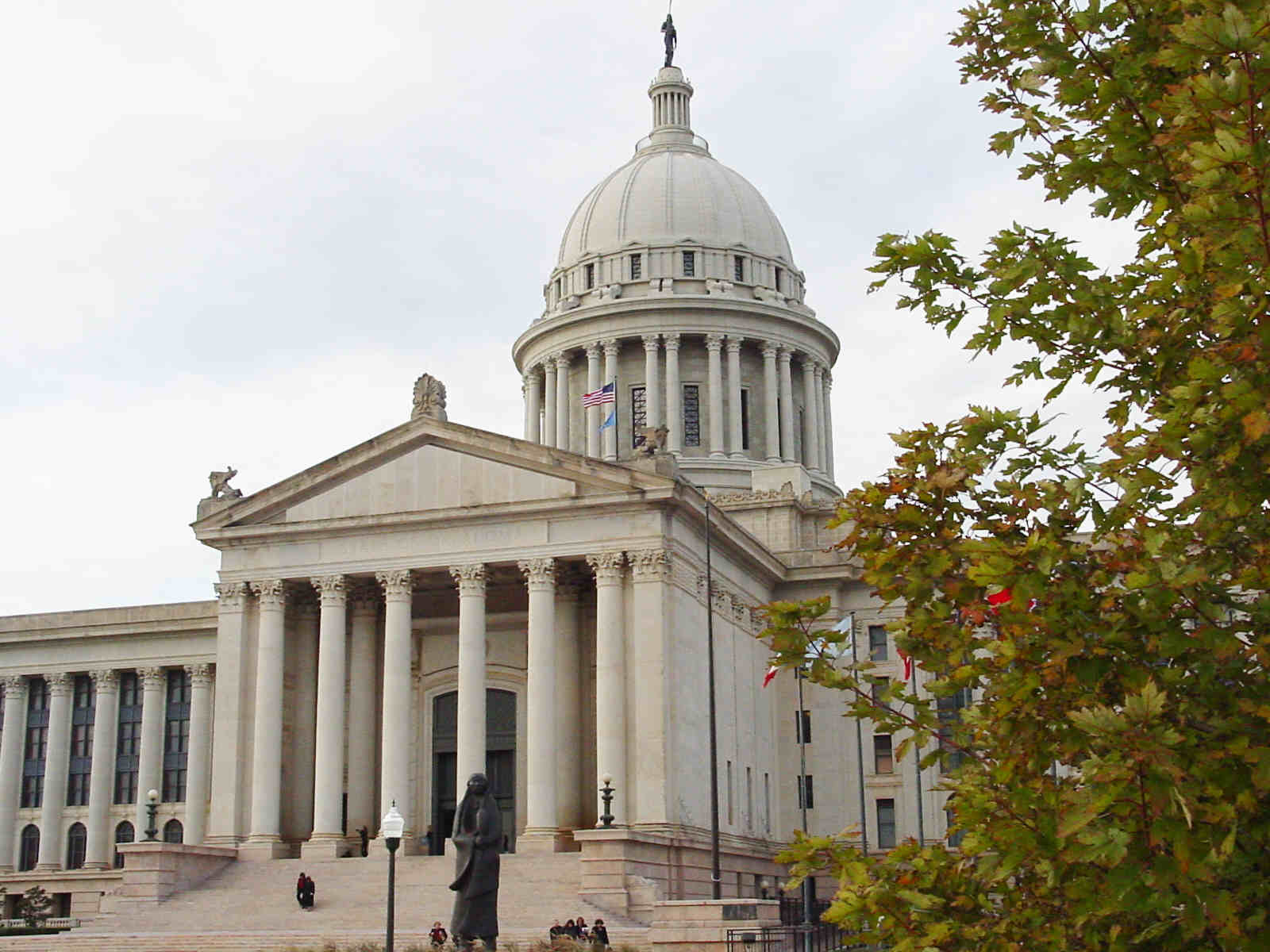
2026 Oklahoma Conservative Index
After taking suggestions from conservative leaders, proposed bills were reviewed by a joint committee composed of members of the Oklahoma Constitution newspaper staff and the OCPAC Foundation (Original Constitutional Principles Affecting Culture). The ten votes for this year’s ratings were selected and the legislators were rated based on their votes on these bills. The measures for the 2026 Oklahoma Conservative Index include reducing property tax increases; opposing creation of the sovereign-wealth fund; against extending the sunset on OETA; against subsidies to insulin manufacturers; against funding gender transition; opposing creation of a state task force to advance early childhood programs; against allowing human composting cremation; allowing firearms in state-owned lodging facilities; requiring that grading at state colleges be based on academics; and against a mandate on health insurance coverage.
RATING CALCULATION
To determine this year’s rating, 10 points were earned for each conservative vote (designated by a C), and no points were awarded for a liberal vote (indicated by an L). Each failure to vote (recorded as a Z) provides only three points. When the rating system was created in 1979, it was decided that there should be a difference between voting liberal, and missing a vote. So, a legislator absent for all the votes could only score a meager 30 percent.
Thus, a legislator voting conservative on eight votes, liberal on one, and failing to vote on another, would receive eighty plus three, or an 83% conservative rating.
This year’s conservative rating was averaged with the legislator’s scores from their previous years of service to obtain the Cumulative Average score. As a result of term limits, no legislator will have a cumulative score based on a period longer than twelve years. By examining this year’s score in relation to the Cumulative Average, the voting pattern of a particular legislator can be determined. While many score nearly the same, year after year, others trend upward or downward from their average. If your legislator is trending toward conservatism, please offer your encouragement and support. If your legislator is exhibiting a leftward trend, it is time to express your disappointment and suggest the need for a replacement if the trend is not reversed.
The average score this year was 51% in the House and 52% in the Senate. The Top Conservative and Top Liberal legislators were selected based upon this year’s scores. Making the Top Conservatives list were the 26 legislators who scored 80 percent or higher. On the Top Liberals list were the 18 lawmakers scoring 20 percent or lower.
TOP CONSERVATIVES
Fourteen legislators scored a perfect 100% conservative rating this year. Nine members of the Senate had perfect scores: George Burns of Pollard, Dusty Deevers of Elgin, Randy Grellner of Cushing, Brian Guthrie of Bixby, Shane Jett of Shawnee, Julie McIntosh of Porter, Dana Prieto of Tulsa, Kendal Sacchieri of Blanchard, and Lisa Standridge of Norman. The five members of the House with a perfect score were: Denise Crosswhite Hader of Piedmont, Tom Gann of Inola, Molly Jenkins of Coyle, Jim Olsen of Roland, and Gabe Woolley of Broken Arrow.
Six members of the House scored 90 percent: Stacy Jo Adams of Duncan, Neil Hays of Checotah, Derrick Hildebrant of Catoosa, Cody Maynard of Durant, Jim Shaw of Chandler, and Rick West of Heavener.
Six legislators scored 80 percent, including one Senator and five Representatives. The member of the Senate was David Bullard of Durant. The House members were: Jason Blair of Moore, David Hardin of Stilwell, Gerrid Kendrix of Altus, Mike Lay of Jenks, and Jonathan Wilk of Goldsby.
TOP LIBERALS
No legislators scored zero percent conservative this year, but three legislators scored less than 10 percent. Senator Mark Mann and Representative Ellen Pogemiller, both of Oklahoma City, scored just 3 percent. And Representative Annie Menz of Norman scored 6 percent.
Eight legislators, four in each chamber, scored 10 percent. The senators include Regina Goodwin of Tulsa, Carri Hicks of Oklahoma City, Senate Minority (Democrat) Leader Julia Kirt of Oklahoma City, and Nikki Nice of Oklahoma City. Representatives scoring 10 percent include Meloyde Blancett of Tulsa, Amanda Clinton of Tulsa, Michelle McCane of Tulsa, and Trish Ranson of Stillwater.
Senator Michael Brooks and Representative Arturo Alonso-Sandoval, both of Oklahoma City, scored 13 percent.
Five Representatives scored 20 percent: Mickey Dollens of Oklahoma City, Ellyn Hefner of Oklahoma City, Suzanne Schreiber of Tulsa, Ron Stewart of Tulsa, and Aletia Timmons of Oklahoma City.
A description of each of the bills used for this year’s ratings is found below. A list of all the legislators with their vote on each of the ten bills, their score for this year, and their Cumulative Average, can be found by opening the PDF file for each chamber below. The ratings for previous years are also available below.
Bills used for the 2026 Oklahoma Conservative Index
(1) Reducing Property Tax Increases
Senate Joint Resolution 39 by Sen. Lonnie Paxton (R-Tuttle) and Rep. Kyle Hilbert (R-Bristow) sent a constitutional amendment (State Question 847) to a vote of the people, which if approved by voters, would lower the caps on annual increases in the fair cash value of property, and would create a tiered system to better protect seniors from rising property taxes. For homestead and agricultural property, the cap would drop from 3 percent to 1.75 percent starting in tax year 2027. For other property, the cap would decrease from 5 percent to 4 percent. The resolution also updates Oklahoma’s existing “senior freeze” by establishing a tiered cap structure for homestead property owned by seniors age 65 and older, based on household income relative to the median income in their county. Opponents of the measure argue that passage of SQ 847 will restrict future revenue growth from property taxes. This means less revenue would become available government to spend.
The Resolution passed the House 85-9 on April 15, 2026 and the Senate 40-8 on April 27, 2026. The YES votes, for the resolution, is the conservative vote. Legislative proposals for State Questions do not require approval of the governor.
(2) Taxpayer Endowment Trust Fund
House Bill 4072 by Rep. Trey Caldwell (R-Faxon) and Sen. Chuck Hall (R-Perry) creates the Taxpayer Endowment Trust Fund intended to generate long-term investment income for the state. It redirects a portion of oil and natural gas production taxes, as well as corporate income tax revenues to the fund. The sovereign-wealth fund – state-owned pool of money that is invested in various financial assets – will operate under the oversight of the Invest in Oklahoma Board, with administrative and operational support provided by the State Treasurer. The measure restricts withdrawals from the fund for at least ten years or until the fund exceeds $1 billion, whichever occurs first. Once that lockout period is met, the board may authorize annual distributable earnings of up to four percent of the fund’s five-year average value, which will be certified by the State Board of Equalization as General Revenue for the following fiscal year.
The state already has several similar funds, such as the so-called “Rainy Day Fund.” Surplus revenue belongs to the people and should be returned to the taxpayers rather than retained in another special government fund managed by state officials and investment consultants who will be paid commissions.
It passed the House 68-25 on April 14, 2026 and the Senate 28-18 on April 16, 2026. The NO votes, against the bill, is the conservative vote. It was approved by Governor Stitt on April 22, 2026.
(3) OETA Sunset Extension
Senate Bill 1461 by Sen. Micheal Bergstrom (R-Big Cabin) and Rep. Gerrid Kendrix (R-Altus) would have extended the sunset date (automatic termination) for the Oklahoma Educational Television Authority (OETA) from July 1, 2026, to July 1, 2031. OETA was established as “an essential function of the state” in 1953, and in 1956 began airing with one transmitting station. The extension would enable continued taxpayer support for the television network. For the current fiscal year, the state appropriated $2.95 million to OETA. Stitt vetoed the extension, which means that if the next governor also holds strong, the state-sponsored TV network may finally lose its taxpayer funding. Oklahoma taxpayers should not subsidize a television network to compete with private television networks.
In his veto message, Governor Stitt said: “Though OETA’s programming might be worthwhile for the viewer, funding a television station is not a core function of state government. I have been consistent in my position that public broadcasting should not depend on government subsidies. In 2023 I vetoed a similar measure (HB 2820), and in 2022 I vetoed sending OETA an additional $8 million in taxpayer funding (HB 1009xx). The Legislature chose to override those vetoes.
Now, President Trump has adopted the same position at the federal level by ending taxpayer subsidies for National Public Radio (“NPR”) and the Public Broadcasting Service (“PBS”) on May 1, 2025. Those platforms have survived and continued to operate. President Trump has shown that ending guaranteed taxpayer subsidies for public broadcasting is not the crisis its defenders claim it to be. Oklahoma should follow his lead by letting viewers and advertisers fund OETA, not Oklahoma taxpayers.”
The bill extending the sunset date passed the Senate 34-12 on March 25, 2026 and the House 67-20 on April 29, 2026. The NO votes, against the extension, is the conservative vote. Governor Stitt vetoed the bill on May 5, 2026.
(4) Insulin Manufacture Subsidies
Senate Bill 1344 by Sen. Paul Rosino (R-Oklahoma City) and Rep. Preston Stinson (R-Edmond) creates the Insulin Access and Affordability Program which will be administered by the State Department of Health to address market shortages for generic insulin. Under the program, the State of Oklahoma will provide financial support to one or more pharmaceutical manufacturers that make or are developing a fast-acting biosimilar insulin in the United States. The pharmaceutical manufacturer or manufacturers must submit annual reports on the development, production, and distribution of the insulin. The FY27 General Appropriations bill provides $1,000,000 for implementation of the measure.
It passed the Senate 32-13 on March 24, 2026 and the House 68-22 on April 29, 2026. The NO votes, against the bill, is the conservative vote. It was approved by Governor Stitt on May 1, 2026.
(5) Ban Funding of Gender Transition
Senate Bill 904 by Sen. Todd Gollihare (R-Kellyville) and Rep. Chris Kannady (R-Oklahoma City) provides that public funds must not be used or distributed to any entity for the provision or subsidy of any gender transition procedures, regardless if the procedures are provided to a child or an adult. The measure also provides that the state Medicaid program must not reimburse or provide coverage for gender transition procedures for minors or adults. In addition, no state property, facility, or building may be used to provide such procedures to minors or adults.
The bill passed the Senate 39-8 on March 25, 2026 and the House 77-14 on May 6, 2026. The YES votes, for the bill, is the conservative vote. It was approved by Governor Stitt on May 12, 2026.
(6) Early Childhood Task Force
House Bill 1979 by Rep. Trish Ranson (D-Stillwater) and Sen. Chuck Hall (R-Perry) creates the 17-member Early Childhood Task Force to study and make recommendations to increase government early childhood services. The Task Force must develop and submit an initial report by November 2027 and a final report by November 2028. The Task Force will work towards creating a framework for a governance structure for early childhood programming. It will conduct an analysis of the current early childhood delivery system in the state and of the Oklahoma Health Care Authority’s policies, and draft proposed legislation to advance the recommendations.
It originally passed the House and was amended and passed by the Senate 37-9 on April 28, 2026. It was returned to the House where it gained final passage 65-26 on May 4, 2026. The NO votes, against the bill, is the conservative vote. It was approved by Governor Stitt on May 11, 2026.
(7) Human Composting Cremation
House Bill 3660 by Rep. Eddy Dempsey (R-Valliant) and Sen. Casey Murdock (R-Felt) adds natural organic reduction as a form of cremation. The measure sets standards for licensure, facility requirements, and the reduction process through the Oklahoma Funeral Board. It was vetoed by Governor Stitt. In his veto message, the governor said: “This bill would legalize natural organic reduction, sometimes referred to as ‘human composting.’ This bill raises questions about moral and human dignity that go beyond ordinary burial practices. Reducing human remains into soil for reuse crosses a line that many Oklahomans believe should be approached with far greater caution. The way a society treats the dead reflects how it understands the dignity of human life. In my view, this legislation moves too far toward treating the human body as material to be repurposed, rather than remains to be reverently laid to rest. Human beings are made in God’s image, and our laws should reflect that dignity even in death.”
It originally passed the House and was amended and approved by the Senate 28-18 on May 5, 2026. It returned to the House where it gained final passage 58-35 on May 6, 2026. The NO votes, against the bill, is the conservative vote. It was vetoed by Governor Stitt on May 12, 2026.
(8) Firearms at State-Owned Lodging
Senate Bill 372 by Sen. Kelly Hines (R-Edmond) and Rep. Jay Steagall (R-Yukon) adds state-owned hotels, cabins, and lodges to an existing statutory provision making it lawful to carry a concealed or unconcealed firearm at these facilities. Prior to the legislation, firearms were prohibited because these facilities were government buildings, just like courthouses and prisons. These lodging facilities will now be treated like privately owned lodging.
The bill passed the Senate 38-5 on March 23, 2026 and the House 77-15 on May 6, 2026. The YES votes, for the bill, is the conservative vote. It was approved by Governor Stitt on May 11, 2026.
(9) Grading Based on Academics
House Bill 3700 by Rep. Chad Caldwell (R-Enid) and Sen. Julie Daniels (R-Bartlesville) requires college students to be graded solely on academic performance, including attendance, and not on their opinions, beliefs, or conduct unrelated to academic situations. “College students should never feel they have to self-censor for fear of receiving a negative grade simply because their beliefs run contrary to those of their professor’s,” Caldwell said. “Nor should they think they’ll get a better grade by agreeing with the opinions or beliefs of those grading their assignments. The purpose of higher education is to teach students to think for themselves and be able to express their ideas within the academic context.” The legislation came from a recommendation by the Oklahoma Free Speech Committee, established under the Oklahoma State Regents for Higher Education. Only one of the state’s 25 colleges and universities has a policy that clearly states what is now required by this law.
It passed the House 80-13 on March 10, 2026 and the Senate 38-7 on April 29, 2026. The YES votes, for the bill, is the conservative vote. It was approved by Governor Stitt on May 5, 2026.
(10) Health Insurance Mandate
House Bill 4294 by Rep. Daniel Pae (R-Lawton) and Sen. Brenda Stanley (R-Midwest City) imposes a government mandate on private health insurance. It was vetoed by Gov. Stitt. In his veto message Governor Stitt said: “This measure would require private health insurers to provide coverage for individuals diagnosed with a particular condition and pay for costly medical devices. I am concerned that this type of top-down unfunded mandate interferes with the free market and shifts the cost onto all policyholders, making it harder to keep health insurance affordable for Oklahoma families.”
It originally passed the House and was amended and approved by the Senate 28-16 on April 29, 2026. It returned to the House where it gained final passage 55-30 on May 5, 2026. It was vetoed by Governor Stitt on May 12, 2026.


Latest Commentary
Friday 24th of July 2026
Friday 24th of July 2026
Friday 24th of July 2026
Friday 24th of July 2026
Friday 24th of July 2026
Friday 24th of July 2026
Friday 24th of July 2026
Friday 24th of July 2026
Friday 24th of July 2026
Friday 24th of July 2026