

Pictured: Initiative Petitions
State Questions Advancing
State Question 832
One measure has made it through the initiative petition process and is scheduled for a statewide vote in 2026. In 2024, supporters of an initiative petition to place State Question 832 on the ballot submitted nearly 180,000 signatures and the Secretary of State verified 157,287 signatures to be valid. Since it is only a state statute change and not a constitutional change, it can be amended in the future by the Legislature with approval of the Governor and only required 92,263 signatures. The proposal would gradually raise the minimum wage in Oklahoma from the current $7.25 per hour to $15 in 2029 and require future increases based on the U.S. Department of Labor’s Consumer Price Index.
By the time the Minimum Wage initiative passed the final legal hurdles, the deadline for the General Election on November 5, of 2024, had already passed. So, Governor Stitt scheduled the election for the next statewide vote which will be the June 16, 2026 Primary Election ballot. In a statement, Governor Stitt said setting the question for the next eligible statewide election would save the state $1.8 million compared to holding a Special Election for the measure.
Chad Wormington, the president and CEO of the Oklahoma Chamber of Commerce, said the proposal was a “major concern.” These “automatic, open-ended increases being linked to a federal government produced index that is based upon cost-of-living rates in cities like New York or San Francisco,” and areas like them, “are not reflective of the actual cost of living in Oklahoma.” Yet, this unrealistic standard would be imposed upon businesses in Oklahoma, which has a much lower cost-of-living.
State Question 836
On September 16, 2025 the Oklahoma Supreme Court rejected a legal challenge to proposed State Question 836, clearing the way for proponents to begin gathering signatures. The challenge had been filed by the Oklahoma Republican Party and Ronda Vuillemont-Smith, former chair of the Tulsa County Republican Party. The protest included many issues, but the most fundamental part of the protest was that it would dissolve one of a political party’s most fundamental roles of choosing their candidates to carry their party banner to the voters. But, the state high court said it did not find sufficient grounds to block the proposal at this stage.
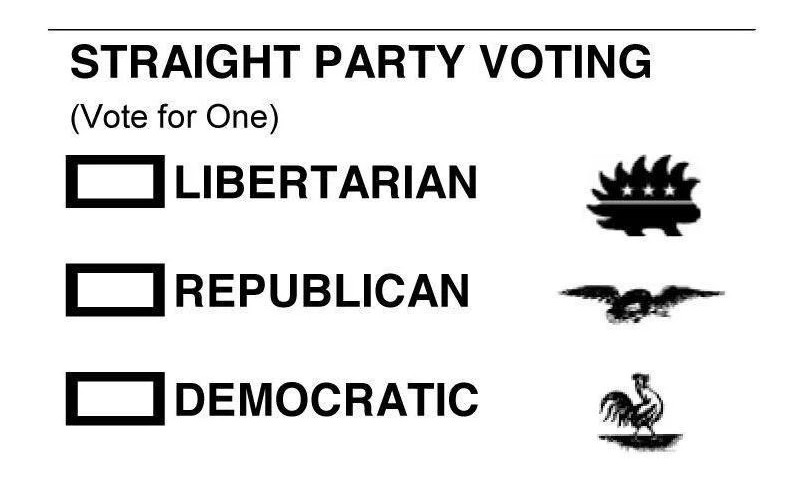
State Question 836 would dramatically change the way elections are conducted, going from the present “closed primary” system to an “open primary” method. It would replace the current partisan election primary system with a single “top-two” primary. All candidates, regardless of party, would appear on the same ballot. The two candidates receiving the most votes, regardless of their party registration, would advance to the general election.
On October 8, the Oklahoma Secretary of State notified the proponents of the initiative, Oklahomans United for Progress, that the 90-day signature collection period could begin. Proponents can collect signatures starting on October 29, 2025, and petition signature pamphlets are due on January 26, 2026. As we went to press, signature collection was still in progress. Currently in Oklahoma, 172,993 valid signatures are required for initiatives such as SQ 836 that would make a constitutional change.
The proposal is labeled as Open Primary Election, which is actually misleading. In a closed primary system, which Oklahoma uses, one must be registered as a voter of a specific political party in order to vote in that political party’s primary. In other words, only voters registered Democrat can vote in the Democratic primary, and only voters registered Republican can vote in the Republican primary. In most states that have an open primary system, a voter does not have to be registered with the political party to vote in its primary, but the voter must choose the primary ballot for the party they wish to vote.
The proposed jungle primary, on the other hand, is different. In a jungle primary, which is being proposed for Oklahoma, all candidates for an office, whether they be Democrat, Republican, Libertarian, or independent, run on one unified primary ballot. While the candidates are still identified by their party, the voter can vote for any candidate they wish on that ballot. If one candidate wins a majority of the vote, then that candidate has won the election, and there is no need for a general election. If no candidate gets a majority, then the two leading candidates appear on the General Election ballot.
Since it is highly unlikely that a single candidate could achieve a majority in a large field of candidates which includes Democrats, Republicans, Libertarians, and independents, the jungle primary usually sends the top two vote-getters, regardless of political party, to the general election. It is therefore possible – and it has happened in California – where both general election candidates are of the same political party. It also means that independent candidates, and third party candidates such as Libertarians, are unlikely to make it to the general election ballot. Currently, independents and all political party nominees appear on the general election ballot.
The group originally filed the proposal as State Question 835, but later withdrew that petition and refiled the issue as State Question 836. Officials with the group say they took this action to clarify concerns and strengthen the petition language. The refiled petition explicitly clarifies that its constitutional provisions do not impact the selection of presidential electors and ensures that the initiative solely addresses the process for partisan primary elections at the state, county, and at the federal level for only the U.S. Senate and U.S. House elections. Additionally, SQ 836 includes that candidates will appear on the ballot identified by party “registration” (SQ 835 had used the term “affiliation”).
In 2004, Washington became the first state to adopt a top-two primary system for congressional and state-level elections. California adopted a top-two primary system in 2010. In Nebraska, a top-two primary system is utilized for state legislative elections. Because Nebraska’s state legislature is nonpartisan, partisan affiliation labels are not listed next to the names of state legislative candidates.
State Question 837
On July 18, 2025, the Oklahoma Secretary of State notified proponents of a recreational marijuana initiative that since no challenges had been filed, the 90-day signature collection period could start on August 6. But, no signatures were submitted by the November 3, 2025, deadline for State Question 837 and the measure is dead. Since it proposed to make a constitutional change, it required 172,993 valid signatures. The proposed Oklahoma Responsible Cannabis Act, sought to legalize marijuana for adults 21 years of age and older. The initiative is now dead.
State Question 838
Francetta Mays, the Associate Pastor at Vernon AME Church in Tulsa, filed paperwork with the Oklahoma Secretary of State on September 4, 2025 for a proposal to establish June 1 as “Greenwood Remembrance and Reconciliation Day.” The day would become an official state holiday (but not a day that government offices would be required to be closed) focused on honoring the lives lost and remembering the destruction of Black Wall Street during the 1921 Tulsa Race Massacre, also called the Tulsa Race Riot.
Mays conducts historical tours at the Vernon AME Church in the Greenwood District, the only surviving Black-owned structure from the massacre which occurred May 31 to June 1, 1921. During the massacre the church served as a safe haven for residents of the area.
The Secretary of State affirmed that the proposed gist of Initiative Petition 450, designated as State Question 838, conforms with state requirements and published notice that September 11, 2025, would be the first day of the 90-day appeal/protest period. No protests were filed and the measure is awaiting for the signature circulation dates to be set. Because it is not a constitutional amendment, but only a new statute or law which can be changed by the Oklahoma Legislature, it only requires 92,263 valid signatures to place the measure on the ballot. The goal of proponents is to have the state question appear on the November 3, 2026 ballot.
State Question 840
A coalition of civic leaders and concerned citizens has launched an effort to take back control of Oklahoma’s government from special interests and force more transparency into the legislative process. On September 12, Open Government Initiative, Incorporated (OGII) filed Initiative 451, designated as State Question 839. However, the initiative was withdrawn and refiled as Initiative 452, designated as State Question 840. The revised proposal would amend the state constitution by adding requirements for Legislative Bill Hearing Rights and Accountability Enforcement. The Secretary of State is reviewing the measure to affirm if the proponents’ suggested gist of the proposition conforms to state requirements.
OGII stands against legislative leaders that unilaterally block bills from even being heard, regardless of public support or merit. The leader of the group is former state Representative Charles Key (R-Oklahoma City) who tried to reform the legislative process by changing legislative rules during his time in the Legislature. Key criticized the Legislature’s lack of transparency, where major decisions and leadership deals are often made behind closed doors, influenced by special interests. “This isn’t about partisanship,” said Key. “It’s about open government, public accountability, and giving Oklahomans the voice they deserve in their own Legislature.”
The proposed constitutional amendment guarantees each Oklahoma Legislator the right to have at least three bills heard in committee each year. If passed by a legislative committee, bills must be scheduled for a floor vote upon the request of the bill’s author. Violations would result in a $10,000 fine for the first offense and automatic expulsion after a second. The amendment would override conflicting constitutional provisions on expulsion, but preserves other Legislative rules and procedures.
The Secretary of State affirmed that the proposed gist of Initiative Petition 452 conforms with state requirements and published notice that the 90-day appeal and protest period (as to Constitutionality) would begin on December 23, 2025, and end on March 23, 2026.
State Question 843
Initiative Petitions 453 and 454, assigned as State Question 841 and 842 respectively, were filed and later withdrawn. Initiative Petition 455 was filed on January 12, 2026 with revisions from the previous two versions and was assigned as State Question 843. Labeled as “Homestead Exemption,” the proposal would eliminate ad valorem taxes on owner-occupied homesteads in three equal steps: 33% of assessed value exempt in 2027, 66%% in 2028, and 100% in 2029 and thereafter. However, since would not apply to bonded indebtedness incurred by schools, counties, municipalities or other political subdivisions in effect prior to December 31, 2026, it would not completely end property taxes until those bonds are paid off. The measure would not cut off property taxes for businesses, including home rental properties. Proponents estimate that once fully in effect it would exempt home owners from $1.2 billion in property taxes annually beginning 2029. It was filed by two current and one former state legislator. State Sen. Shane Jett (R-Shawnee) and Rep. Jay Steagall (R-Yukon), joined former Rep. Mike Reynolds (R-Oklahoma City), to create the proposal. The three lawmakers are conservatives, and named “Top Conservatives” based on their scores on the Oklahoma Conservative Index rating state legislators, published by the Oklahoma Constitution newspaper.
The Secretary of State affirmed that the proposed gist of Initiative Petition 455 conforms with state requirements and sent a request for publication on January 13. The 90-day appeal and protest period (as to Constitutionality) would will begin once the notice is published. Because it is not a constitutional amendment, but only amends an existing statute or law which can be changed by the Oklahoma Legislature, it only requires 92,263 valid signatures to place the measure on the ballot.
Reform of the Initiative Petition Process on Hold
Last year, the Oklahoma Legislature passed legislation which was signed into law on May 23, 2025, by Governor Stitt that will impact the future collection of signatures on initiative petitions. Senate Bill 1027, by Sen. David Bullard (R-Durant) and House Speaker Kyle Hilbert (R-Bristow) makes reforms to the initiative petition process.
The legislation requires that initiative petitions gather signatures from a larger geographic swath of Oklahoma, although successful petitions could still visit far less than half the state. The number of signatures from any given county is capped at a set percentage of the number of votes cast in that county in the last general election for Governor. The effect of this reform is that signatures must come from at least 18 of Oklahoma’s 77 counties.
It also requires paid signature gatherers to disclose their financial backers and mandates that only registered Oklahoma voters are eligible to gather signatures. It also will simplify the language of petition summaries, or gists, and requires that these summaries explicitly state whether a petition will have a fiscal impact. And it requires that those who sign a petition must first read the full ballot title for the proposed measure.
Because of a legal challenge, the legislation was blocked by the Oklahoma Supreme Court from going into effect until the court rules on the challenge. State Question 836 was the first initiative petition that would have been impacted by the changes. But, since the court has not yet settled the issue, the collection of signatures on new initiative petitions will be governed by the laws in effect as of November 2024. The Oklahoma Supreme Court held oral arguments on the challenge on November 18, 2025. As we went to press, the state high court had not yet issued a ruling in the case. Senate Bill 1027 was one of the ten bills we included on the 2025 Oklahoma Conservative Index rating state legislators.


Latest Commentary
Saturday 31st of January 2026
Saturday 31st of January 2026
Saturday 31st of January 2026
Saturday 31st of January 2026
Saturday 31st of January 2026
Saturday 31st of January 2026
Saturday 31st of January 2026
Saturday 31st of January 2026
Saturday 31st of January 2026
Saturday 31st of January 2026
Saturday 31st of January 2026
Saturday 31st of January 2026
Saturday 31st of January 2026