


Oklahomas Reading Crisis and How to Solve it
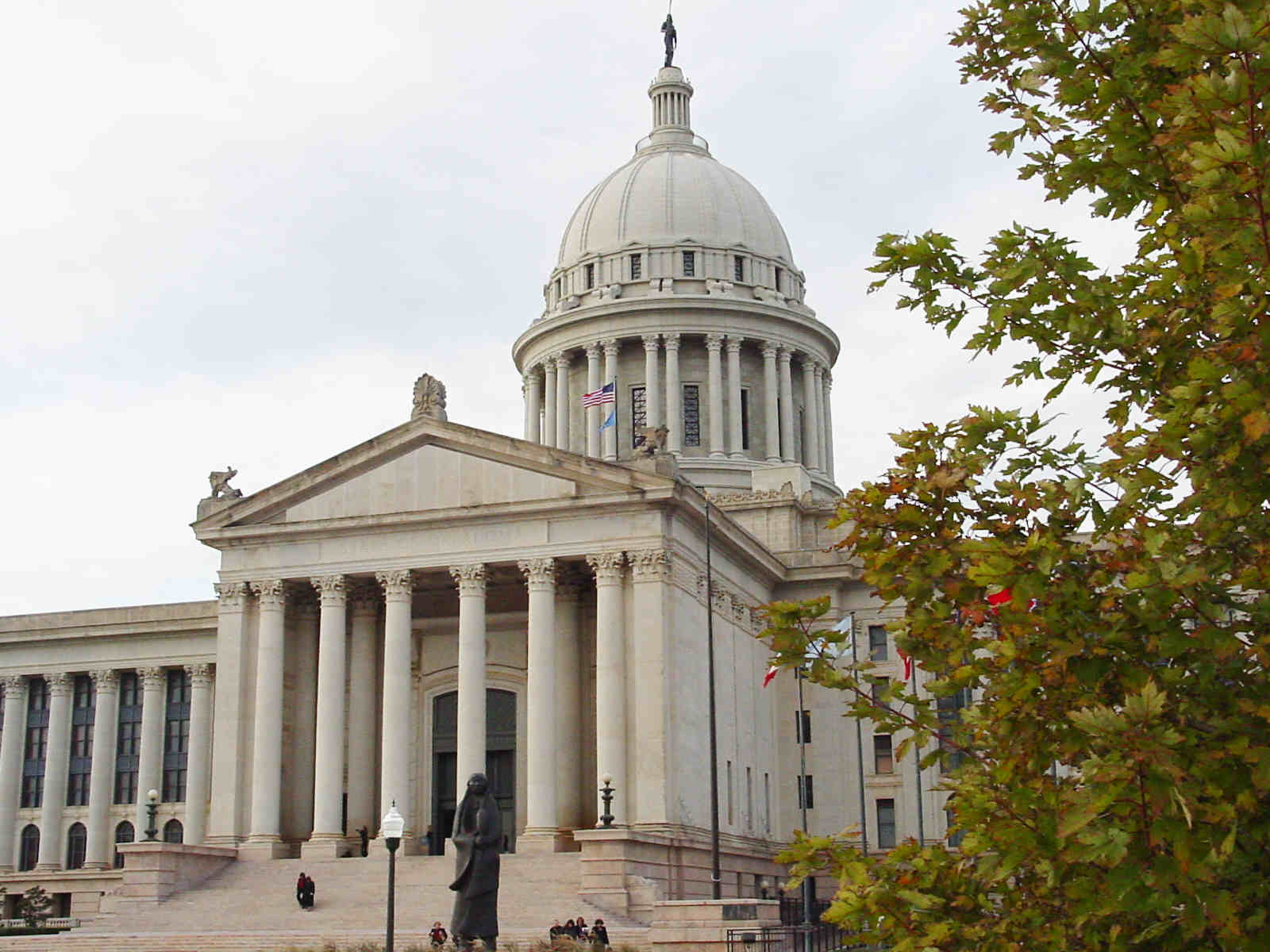
“We must stop accepting the narrative,” says state House Speaker Kyle Hilbert, “that Oklahoma is forever tied to the bottom of the national education rankings. Every Oklahoma child deserves the chance to become a strong reader. As a father, I want every Oklahoma child to have the same opportunity I want for my own kids: to open a book, understand it and build a life of possibility.”
Recent education and literacy data support their concerns. As of late 2025, Oklahoma ranked 47th nationally for fourth grade reading. Only 27% of third graders, 24% of fourth graders, 26% of fifth graders, 25% of sixth graders, 22% of seventh graders, and 21% of eighth graders scored proficient or advanced in reading. It’s even a problem in most of our better public school systems. In Edmond, 58% of the third-grade students tested less than proficient on the English Language Arts (ELA) test, which measure their skills in the written and spoken language. In Broken Arrow, it was 73%, at Deer Creek it was 56%, and in Bixby, 60% failed to achieve proficiency. It didn’t improve by the end of high school, or beyond. Oklahoma 12th graders recently recorded their worst scores in three decades. Their ACT scores averaged a composite 17.5 in 2025, second lowest in the nation. Plus, an estimated 560,000 – more than 20% of adult Oklahomans – have below-average literary skills and struggle with complex texts and inferences.
The consequences are enormous. When children can’t read proficiently by the end of third grade, they struggle in math, science, history and art, and are four times more likely to miss graduating on time. It’s also at the root of many labor shortages, as pointed out by House Speaker Hilbert. “If our kids can’t read,” he said, “ then they’re not going to be doctors. They’re not going to be attorneys. They’re not going to be engineers.”
The State Chamber of Commerce also describes low literacy as one of our most pressing economic problems. Its business leaders recognize that stronger essential reading skills are an essential pathway to building a stronger workforce and long-term economic stability.
Chamber President Chad Warmington hopes our state leaders approach the problem with the same urgency as Oklahoma fans would if their football team was last in the SEC. “If Oklahoma was dead last in football for more than a year,” he says, “there would be panic in the streets.” He adds that based solely on reading scores, we would be dead last in the SEC and in the Big 12 – the Sooners’ former conference.
What Mississippi Has Done
Fortunately, there’s enough awareness among legislators, administrators, teachers, parents students and business leaders to address the problem and implement improvements. Most understand that not one, but a variety of measures are needed to see a rise in test scores, workforce capability and statewide prosperity. An excellent starting point has been to look at what other states have done with considerable success, with the most rightly publicized improvement coming from the state of Mississippi.
“The Mississippi Miracle,” as its called, is a series of education reforms which began in 2013 when the state passed the Literacy-Based Promotion Act. This landmark law requires all K-3 public school students to read at grade level by the end of third grade (effectively banning social promotion), requires students to pass a reading test for promotion to fourth grade, provides intensive Intervention for struggling readers by using literacy coaches and enhanced teacher training, applies state-level oversight from the Mississippi Department of Education (MDE) and keeps parents informed throughout the process.
A key component of the state’s improved literacy scores has been in-depth training of teachers and tutors in the Science of Reading ( SOR) – a vast body of interdisciplinary research that explains how the brain learns to read and what instructional methods work best. It’s based on decades of empirical data which show that reading isn't natural to children. It must be taught
Although teaching phonics is the foundation of SOR, it also applies syntax (arrangement of words) and semantics (meaning of words and phrases) in its instruction. When students are taught in this manner while learning to read basic text, they begin making the connections, opening new neural pathways in the brain as they start to understand the material. They’re off to the races at this point, opening up a bright future of achievement and lifelong learning.
Mississippi has employed other measures to help improve student literacy outcomes. Strong leadership and constant communication between the governor, legislators, educators, and parents has created a collaborative effort toward its goals. Targeted funding from state and private foundations has produced positive outcomes. So has a pre-kindergarten pilot reading plan. They’ve also followed Florida’s lead in providing annual letter grade ratings to each public school. Plus, the state not only raised the floor but raised the ceiling of what reading scores it expects. That change in 2019 briefly increased third-grade retention until students raised their level of achievement to meet the higher expectations.
Although Mississippi is the poorest state in the nation, and ranks near the bottom in K-12 school spending, the host of reform policies they've enacted since 2013 have caused their overall education rankings to soar. They experienced the highest growth in the nation in reading and math between 2013 and 2024, rising from 49th to 9th out of the 50 states. Adjusting for demographics, Mississippi fourth graders scored highest in the nation in fourth grade reading, fourth grade math, eighth grade math, and scored fourth in the nation in eighth grade reading. In fact, Mississippi is the only state that has seen improvement across all achievement levels in fourth grade reading over the past decade.
In 2014, the state ranked 48th in overall education rankings. As of 2025, they’re 16th, their highest spot ever. In 2013, Mississippi’s high school graduation rate was 74.5%. Now it’s 89.2% – above the national average. A record 85% of its third graders scored proficient or better on the most recent reading assessment tests. The number rose to 92.4% after re-tests, which allows those students to advance to fourth grade. Even during COVID, Mississippi education scores didn’t drop, unlike most states in the nation.
What About Oklahoma?
Oklahoma is no stranger to education reform. In 2011, newly elected State Superintendent Janet Barresi championed the Reading Sufficiency Act (RSA) – a law that provided early intervention to struggling readers by third grade and banned them from promotion if their reading was far below grade level. Those changes helped increase Oklahoma’s fourth grade reading score from 215 in 2011 to 222 in 2015, above the national average of 221. However, Barresi lost reelection in 2015 to Joy Hofmeister, who successfully lobbied to have the law gutted. The result? Reading outcomes for fourth graders steadily declined, dropping to 207 in 2024 – lower than the national average of 214.
Two lawmakers have filed legislation in both chambers to reverse that trend. State Rep. Rob Hall (R-Tulsa) and state Sen. Micheal Bergstrom (R-Adair) have, co-authored House Bill 2944 and Senate Bill 1271, which together would require early intervention for K-3rd grade students who have a reading deficiency, reimplement the policy of retaining third graders who do not read on grade level, and assign literacy coaches to districts with low reading scores.
These proposed bills are modeled after Mississippi’s landmark Literacy Based Promotion Act (2013), which was the law most responsible for that state’s improved reading scores. They would build upon Oklahoma’s Strong Readers Act (Senate Bill 362), which became law in June, 2024 and made the Science of Reading (SOR) the required instructional approach, increased teacher training and banned the widely discredited “three-cueing” method to teach reading. Three-cueing emphasizes guessing at unknown words using context, sentence structure and letter shapes. It often harmed development of strong phonics skills.
“These reforms,” said Bergstrom, “have a proven record of success. However, If we want to see significant progress, we must pass these changes and stick to them. Oklahoma cannot afford another decade of illiteracy.”
“Widespread illiteracy is a policy choice,” says Hall. “We must make the necessary policy changes here in Oklahoma to put our students on a trajectory of success.”
Several communities in Oklahoma have already trained their elementary teachers in the SOR. One such town is Warner, home to 1500 residents, 800 students and Connors State College. Located 20 miles north of Muskogee, they’ve adopted several education strategies that have made them one of the top 5% highest performing public schools in the state. In 2025, their students scored above the state average in every tested education level.
Warner banned school cellphone use years ago, long before the new state law. They’ve employed frequent benchmark testing and tracking of students’ individual scores, a vast improvement over the once-a-year-constant-teaching-to-the-test method. They’ve limited class sizes to 24, despite enrollment growth. And they’ve hung 16 big banners on their Event Center wall, each with the letter “A” as the centerpiece. The A’s not only celebrate the grades received on state report cards since 2013, but demonstrate how highly this district values student achievement.
Behavioral issues are a problem everywhere, and have driven many a good teacher out of the profession. But Warner principals handle them quickly and with strict discipline, thus allowing their teachers to teach and students able to learn without disruptions.
Yet they’re expanded extracurricular activities, class options and school spirit events – all to create a culture where kids enjoy school as they advance academically.
Families in the Warner area have taken notice. Although the town has experienced little population change in the last 15 years, its school district has grown by 33%, mostly from student transfers.
Let’s hope hundreds of Oklahoma communities learn from their success, and Mississippi’s. The legislative table is being set and awareness among all interested parties is apparent. Proper follow-through will soon become the big question – a question that will be answered over the next ten years.



Latest Commentary
Friday 24th of July 2026
Friday 24th of July 2026
Friday 24th of July 2026
Friday 24th of July 2026
Friday 24th of July 2026
Friday 24th of July 2026
Friday 24th of July 2026
Friday 24th of July 2026
Friday 24th of July 2026
Friday 24th of July 2026